Founder-led software studio — est. Bergen, Norway
Custom software, shipped properly.
Delyxa designs and builds customer-facing products, internal tools, and the unglamorous systems in between. One senior team from first call to production, and no handoffs along the way.
- Location
- Bergen, Norway
- Reach
- In person across Norway, remote worldwide
- Response
- Replies within one business day
- Company
- Delyxa AS · Org.nr 933 356 671
What we build.
New products & MVPs
From an idea, a deck, or a Figma file to a product in users' hands. We scope ruthlessly, ship a real first release, and iterate on live feedback instead of speculation.
- Product shaping and scope cuts
- Full-stack build: frontend, backend, infrastructure
- Launch, analytics, and the first iteration cycles
Internal tools & automation
Operations dashboards, workflow automation, and integrations that remove manual work. Built for the people who use them daily, not for a screenshot.
- Replace spreadsheet-and-email workflows
- Connect systems that don't talk to each other
- Reporting and visibility for growing teams
Rescue & modernization
A fragile codebase, a stuck roadmap, a developer who left. We stabilize what exists, document it, and get releases moving again without demanding a rewrite first.
- Audit and stabilize existing systems
- Untangle technical debt in priority order
- Restore release confidence and momentum
Proof, not promises.
SkinPricer
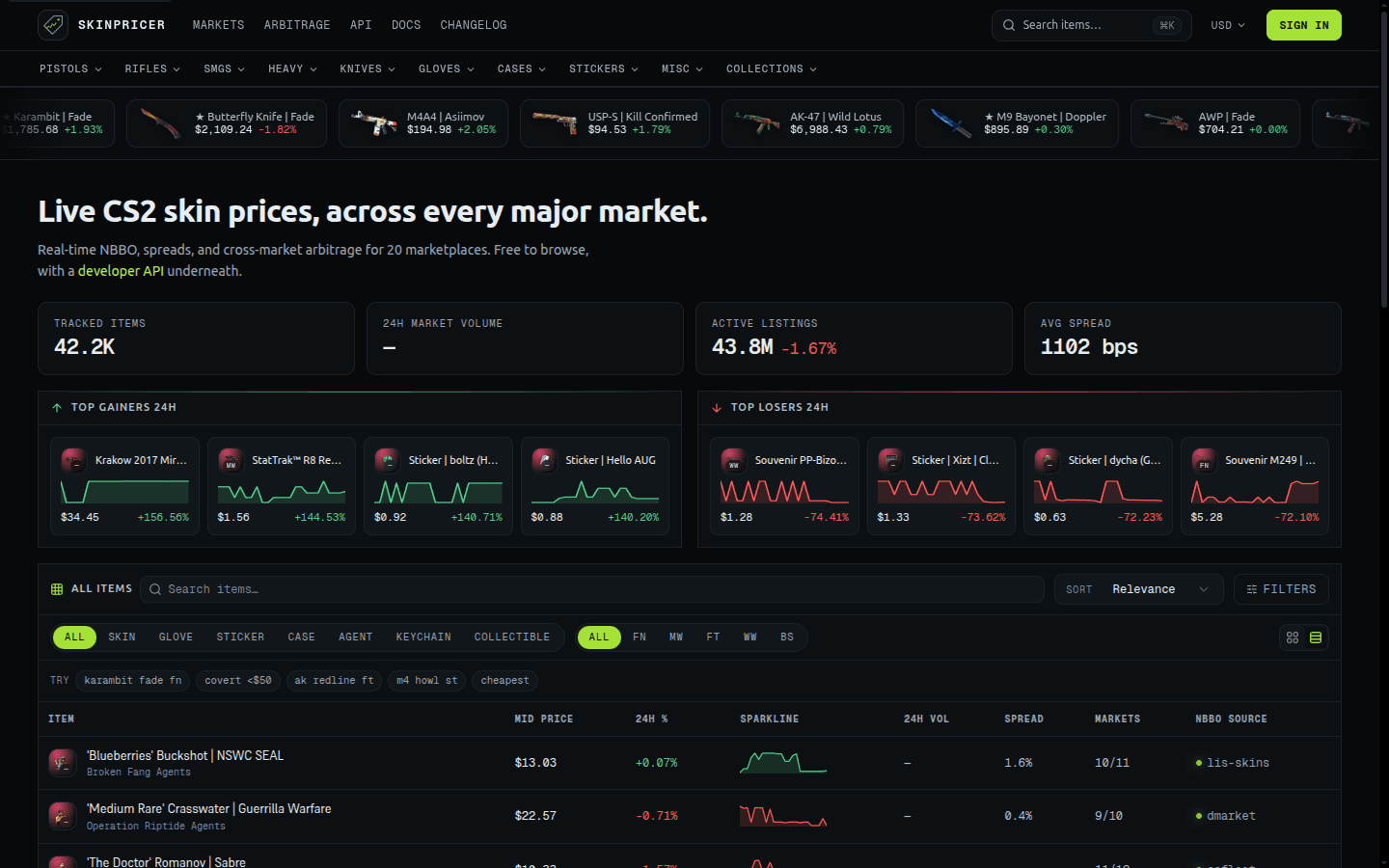
Own productReal-time market intelligence for CS2 skins.
Delyxa built and operates SkinPricer end to end: price aggregation across 20 marketplaces, a real-time NBBO engine for spreads and cross-market arbitrage, and a public developer API underneath. Free to browse, live in production.
- marketplaces tracked
- 20
- real-time best bid & offer
- NBBO
- public developer access
- API
- to browse
- Free
Client work
Anonymized by agreement — detailed walkthroughs in the intro call.
| Sector | What we built | Status |
|---|---|---|
| Consumer platform | Full-stack rebuild of the customer journey and backend foundation | In production |
| Pricing & data infrastructure | Ingestion and normalization layer turning fragmented sources into one operational dataset | In production |
| Operations dashboard | Internal platform bringing a high-volume workflow, reporting, and controls into one place | In production |
How an engagement runs.
Scope
A short call, then a written plan: what we build first, what it costs, and what you'll be able to click at the first milestone. Days, not weeks.
Build
Short iterations you can actually use, demos every week, and a direct line to the person writing the code. No status-report theatre.
Ship & iterate
Launch, measure, keep improving. The people who built it stay on it — there is no handoff to a second team.
How we work
- You talk to the person building it. There are no account managers.
- Product decisions and code decisions happen in the same head.
- A small scope shipped beats a big scope promised.
- Boring technology, clean handoffs, code the next developer will thank you for.
Before you reach out.
- What kinds of clients do you work with?
- Founders getting a first product out, and established teams that need internal tools or help with an existing system. Most work comes from Norway; remote engagements run worldwide.
- What does a typical engagement look like?
- A short intro call, a written scope with a fixed first milestone, then weekly demos of working software. Engagements range from a few weeks to ongoing product partnerships.
- Can you join an existing product or codebase?
- Yes. Roughly half of Delyxa's work starts inside code someone else wrote. We audit first, stabilize what's fragile, and improve incrementally instead of pushing for a rewrite.
- Why is most client work anonymized?
- Client agreements. SkinPricer is Delyxa's own product, so it's public. For client work, detailed walkthroughs and references are shared in the intro call.
Tell us what you're trying to ship.
Bring the product idea, the bottleneck, or the messy system. The intro call covers scope, priorities, and the fastest realistic first milestone — no sales process attached.